
The holidays are a time to gather with family and friends around the table. During this season, it is common to enjoy traditional dishes, desserts, and drinks that are part of our celebrations. However, when these meals are enjoyed repeatedly over several weeks, maintaining a balanced diet can become more challenging.
With a few simple changes, you can enjoy holiday meals in Puerto Rico while taking care of your nutrition and overall well-being.
Don’t arrive at holiday gatherings too hungry
Some people decide to skip breakfast or lunch so they can eat more at a family gathering. While this may seem like a way to compensate, arriving overly hungry can cause you to eat quickly and serve yourself larger portions than you actually need.
Try to maintain your regular mealtimes. Before attending a celebration, consider having a balanced snack, such as fruit with unsweetened yogurt, vegetables with hummus, or a small handful of nuts.
Eating something light before heading out can help you better manage portion sizes and make food choices more thoughtfully. During the holidays, there is no need to follow an “all-or-nothing” approach: you can enjoy your favorite dishes while paying attention to how much and how often you eat them.
Build a more balanced holiday plate
Variety is an important part of a healthy diet. When preparing your plate, try to include different food groups rather than filling it mainly with rice, bread, pasta, or other side dishes.
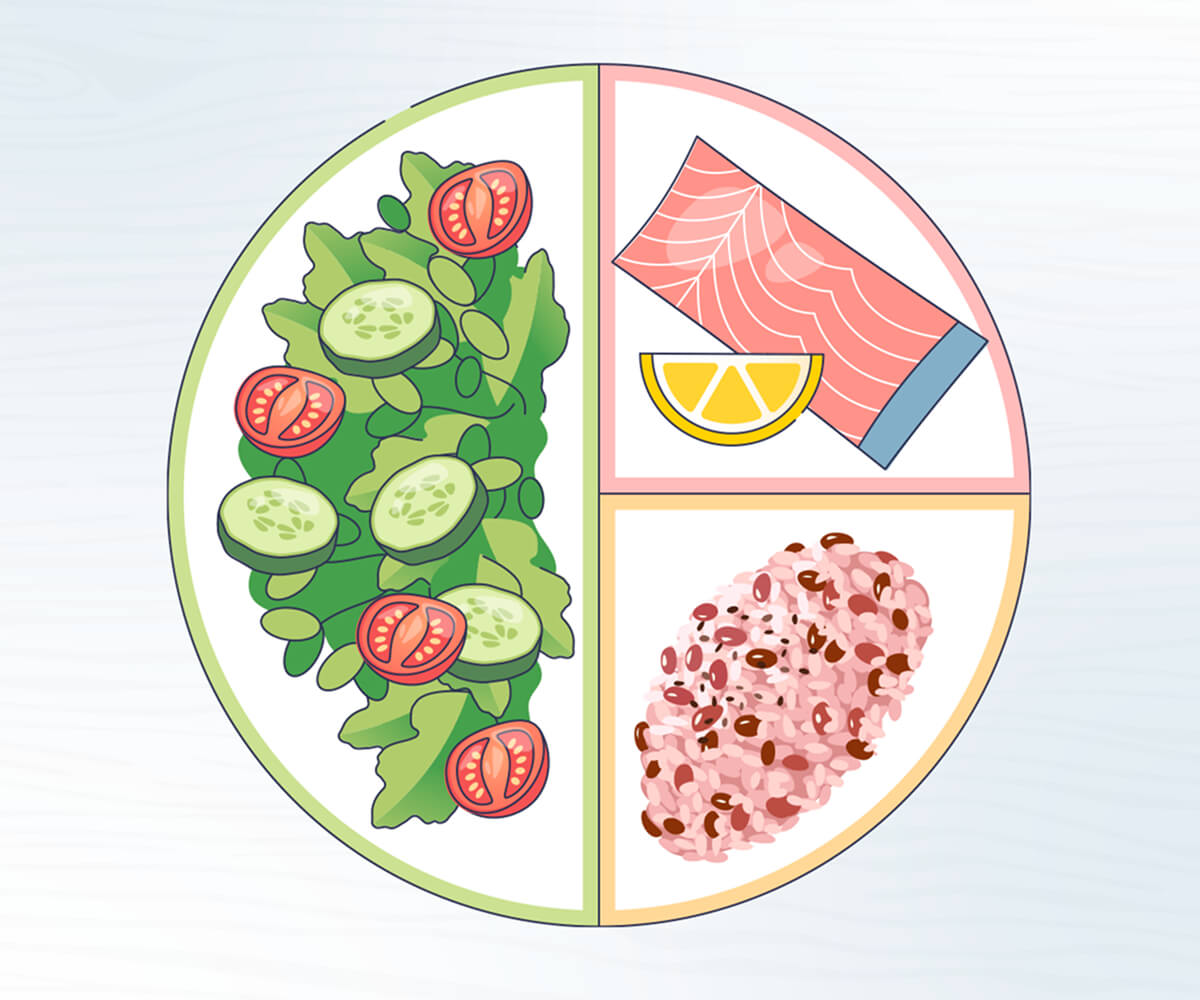
- Fill approximately half your plate with salad or vegetables.
- Reserve one-quarter of your plate for a protein source, such as turkey, chicken, fish, lean meat, beans, or other legumes.
- Use the remaining quarter for rice, starchy vegetables (viandas), Puerto Rican pasteles, or another side dish.
- Serve sauces, dressings, and other toppings in small amounts.
This distribution does not have to be exact. Its purpose is to help you visualize a more varied plate and better manage portion sizes during holiday meals. The appropriate amount of food may vary depending on each person’s age, physical activity level, and health needs.
Manage portion sizes without giving up your favorite foods
Portion sizes can make a significant difference during the holidays. A plate may include nutritious foods, but if the portions are too large, you could end up eating more than your body needs.
To manage portion sizes:
- Use a smaller plate.
- Start with a moderate serving.
- Eat slowly and enjoy each bite.
- Wait a few minutes before going back for seconds.
- Choose the dishes you truly want to try.
- Share dessert or choose a small portion.
- Avoid eating directly from serving trays or containers.
It is also important to listen to your body’s signals. Try to recognize when your hunger begins to decrease, and do not wait until you feel overly full to stop eating.
Cut back on sugar without sacrificing flavor
Desserts and sweetened beverages tend to be more common during holiday celebrations. You do not need to eliminate them, but you can manage how much you consume and avoid having several sugary options during the same meal.
Here are some recommendations:
- Choose the dessert you enjoy most instead of trying them all.
- Serve yourself a small portion.
- Use fruit to add sweetness to certain recipes.
- Gradually reduce the amount of sugar in recipes.
- Avoid adding extra sugar to beverages that are already sweet.
- Alternate traditional holiday drinks with water.
- Read the labels on juices, desserts, and prepared foods.
Sugary drinks can contribute a significant amount of sugar without providing the same feeling of fullness as food. That is why water should remain your main choice for staying hydrated. You can add lemon, lime, cucumber, or fruit to give it more flavor.
Limit salt and processed foods
Sodium can be found in the salt we use when cooking, but it is also present in broths, seasonings, cold cuts, prepared meats, cheeses, soups, and canned foods.
During the holidays, several high-sodium dishes may be served at the same meal. To reduce your intake:
- Use herbs, garlic, onion, pepper, and citrus fruits to add flavor.
- Choose low-sodium broths and products.
- Rinse certain canned foods before using them.
- Taste your food before adding more salt.
- Serve sauces and dressings on the side.
- Pair prepared foods with fresh fruits and vegetables.
- Read the nutrition facts labels on products.
Reducing salt does not mean your food has to lose its flavor. Spices, fresh herbs, and citrus juices can help create delicious dishes.
Choose healthier cooking methods
The way food is prepared can also affect its fat, sugar, and sodium content.
Whenever possible:
- Choose cooking methods that require less fat, such as baking, roasting, boiling, or steaming.
- Remove visible fat from meats.
- Use moderate amounts of butter, oils, and sauces.
- Prepare dressings and seasonings at home.
- Add vegetables to side dishes.
- Choose fresh meats instead of highly processed options.
- Modify part of a recipe rather than changing it completely.
For example, you can keep your traditional main dish while preparing some side dishes with less salt or fat. These small adjustments can help create healthier holiday meals without losing the flavors that make the season special.
Stay hydrated during holiday gatherings
Between conversations, music, and food, it is easy to forget to drink water. In addition, sugary and alcoholic beverages can take the place of water during gatherings.
Try to drink water throughout the day, not just when you feel thirsty. You can have a glass of water with your meal and alternate it with other beverages.
Staying hydrated helps your body function properly. It may also help you distinguish between feeling hungry and needing fluids. Hydration needs may vary depending on each person’s age, physical activity level, climate, and health conditions.
Store food safely
Good nutrition also involves preparing and storing food properly. During celebrations, serving trays may remain on the table for several hours, increasing the risk of microorganisms multiplying and potentially causing illness.
Remember four important steps: clean, separate, cook, and chill.
- Wash your hands and food preparation surfaces before and after preparing food.
- Keep raw meats separate from ready-to-eat foods.
- Cook meat and poultry thoroughly.
- Refrigerate perishable foods and leftovers within two hours.
- Divide large quantities of food into smaller containers so they cool more quickly.
- Reheat leftovers thoroughly before serving.
- Discard any food if you are unsure how long it has been left outside the refrigerator.
Leftover turkey and other cooked dishes should generally be eaten within three to four days or frozen for longer storage.
Conclusion: enjoy the holidays with balance
Maintaining a healthy diet during the holidays does not require giving up traditions or turning down your favorite dishes. Managing portion sizes, including a variety of foods, drinking enough water, and making small changes to how meals are prepared can help you enjoy the season while taking care of your body.
Nutritional needs vary from person to person. If you have diabetes, high blood pressure, high cholesterol, kidney disease, food allergies, or another health condition, it is important to receive recommendations tailored to your health.
Visit the Salus medical directory at https://saluspr.com/en/medical-directory/ and schedule an appointment with nutrition specialists who can help you develop a healthy eating plan based on your needs and lifestyle. The directory includes nutrition professionals at different locations throughout Puerto Rico.
Part 1
Part 2